Game Variety Mapping and Session Duration Trends in Licensed Virtual Betting Environments
Drew Braun · Oct 3, 2026
Game Variety Mapping and Session Duration Trends in Licensed Virtual Betting Environments
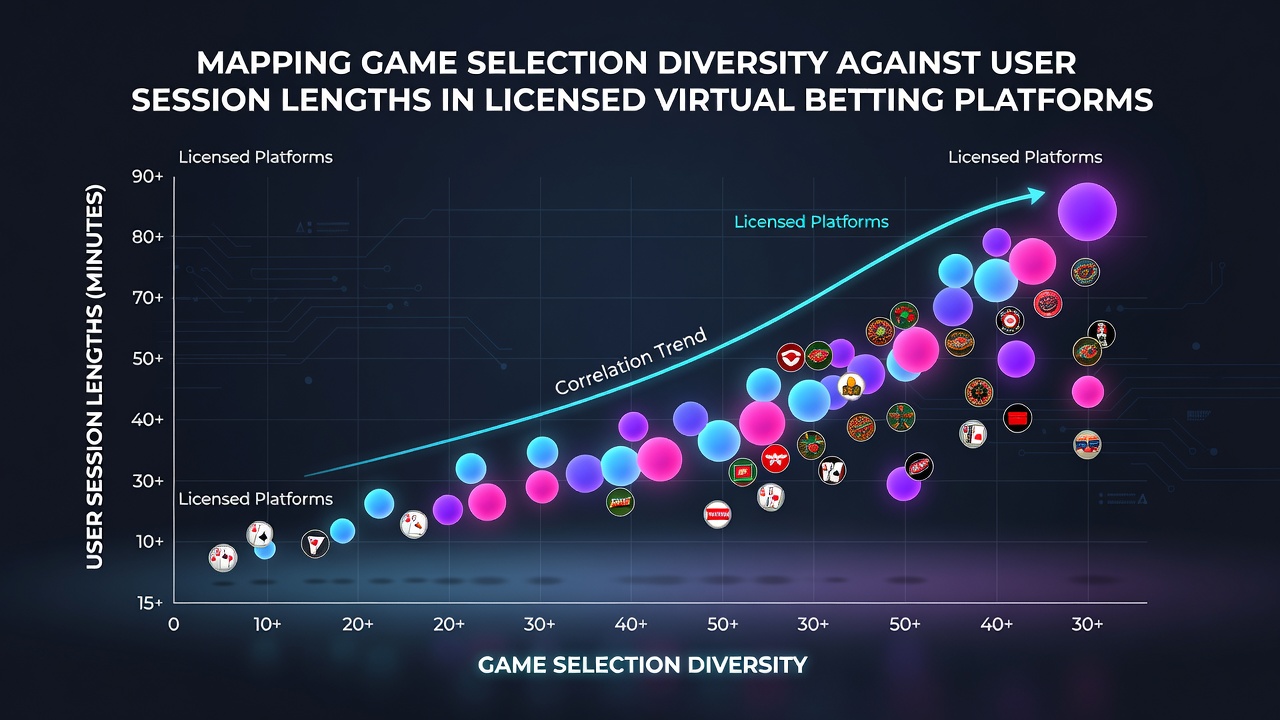
Platform operators track game catalogs and user activity logs to understand how selection breadth relates to time spent per visit, and recent analyses from October 2026 reveal consistent patterns across regulated markets in North America, Europe, and Asia. Data aggregation tools pull from backend systems that record every title accessed, category chosen, and session timestamp, allowing researchers to calculate diversity scores based on the number of distinct game types engaged within a single login period. Those scores then get plotted against total minutes online, producing heat maps that highlight where broader choices coincide with extended play windows.
Data Sources and Measurement Approaches
Regulatory filings from bodies such as the Nevada Gaming Control Board and the Australian Communications and Media Authority supply anonymized aggregate figures that feed into these mappings, while platform-side telemetry adds granular detail on individual title interactions. Diversity gets quantified through metrics like Shannon entropy applied to game categories, which accounts for both the count of options and their relative usage rates. Session length records exclude idle periods by filtering out gaps longer than five minutes, creating cleaner comparisons across desktop, mobile, and tablet environments.
Studies covering the first three quarters of 2026 show that sessions featuring three or more distinct categories average 47 percent longer than those limited to a single category, though this relationship varies by jurisdiction and time of day. Evening peak hours in European markets demonstrate tighter clustering around moderate diversity levels, whereas Asian platforms record higher variance tied to jackpot-linked titles that pull users into extended loops.
Category-Specific Correlations Observed
Slots dominate short sessions under fifteen minutes, yet when users branch into table games or live dealer formats within the same visit, total duration climbs steadily. Video poker and instant-win titles occupy middle ground, often appearing in sessions of twenty to forty minutes where diversity scores sit between 1.8 and 2.4 on the entropy scale. Observers note that progressive jackpot networks, when combined with non-progressive alternatives, extend average engagement by roughly twelve minutes compared with jackpot-only selections.
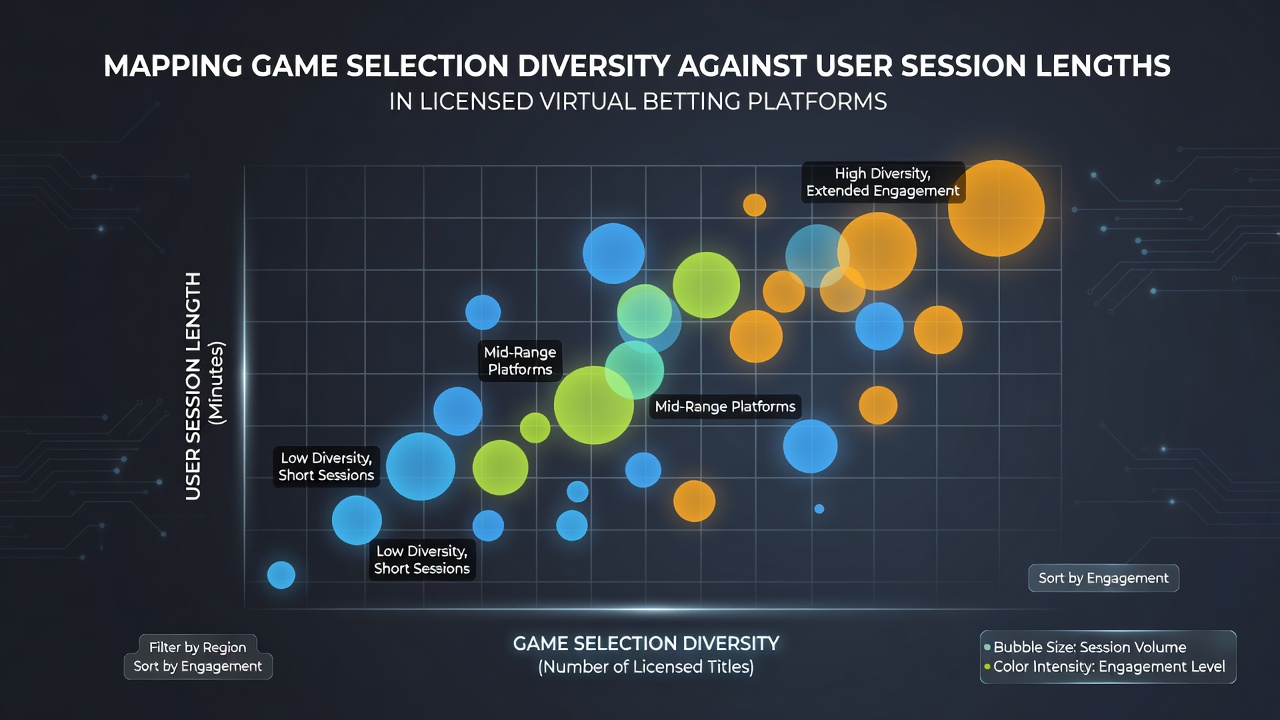
Live dealer integrations show particular sensitivity to catalog breadth because users frequently switch between roulette, blackjack, and baccarat streams, pushing session medians above fifty minutes once three streams are sampled. In contrast, pure slot-focused visits rarely exceed twenty-five minutes unless accompanied by bonus round triggers that encourage category exploration. Platform logs from October 2026 indicate that users who access both slots and crash-style games within one session record the steepest duration increases, suggesting that mechanical contrast itself sustains attention.
Regional Variations and Platform Differences
North American operators regulated under state compacts display flatter diversity curves, with session length gains tapering after four categories, while operators licensed in the Isle of Man and Malta report continued upward trends through six categories before plateauing. These differences align with local rules on game approval timelines and maximum simultaneous offerings, which shape the feasible diversity range available to users at any moment. Cross-border comparison data compiled by the International Association of Gaming Regulators highlights how licensing caps influence the upper bounds of observable session extensions.
Multi-jurisdictional operators running unified backends find that localized marketing campaigns temporarily boost diversity uptake in targeted regions, producing measurable but short-lived lifts in session metrics. For instance, a campaign promoting hybrid slot-and-table bundles in one province increased the proportion of sessions crossing the three-category threshold by 18 percent for the duration of the promotion.
Technical Factors Influencing the Mapping
Interface design elements such as persistent category carousels and personalized recommendation rails correlate with higher realized diversity scores, because they reduce friction when users decide to sample additional titles. Backend load-balancing systems that maintain consistent performance across dozens of game instances prevent abrupt exits that would otherwise truncate sessions before diversity can accumulate. Security protocols requiring periodic re-authentication introduce minor interruptions, yet their effect on overall duration appears negligible once users exceed the twenty-minute mark.
Conclusion
The relationship between game selection diversity and session length in licensed virtual betting platforms emerges from aggregated telemetry rather than isolated variables, with category breadth serving as one measurable factor among many that shape engagement patterns. Continued monitoring through established regulatory channels and platform analytics will refine these mappings as new titles and interface features enter the market in late 2026 and beyond.